
If your doctor has recommended a coronary angiogram, you may be wondering what the day actually looks like. Here is a step-by-step description of what to expect — not the technical detail of the procedure, but the practical experience.
Before the day
You will receive written pre-procedure instructions. Common ones include:
- Fasting from midnight the night before
- Adjusting some medications (your team will tell you which to hold and which to continue)
- Arranging transport home — you cannot drive for 24 hours
On the day
You arrive at the cath lab admission area, usually two hours before your scheduled procedure time. After paperwork and consent, you will be changed into a gown, an intravenous line will be placed, and pre-procedure blood tests are taken. You will meet the cardiologist and the cath lab team, who will review the plan, the risks, and what to expect.
In the cath lab
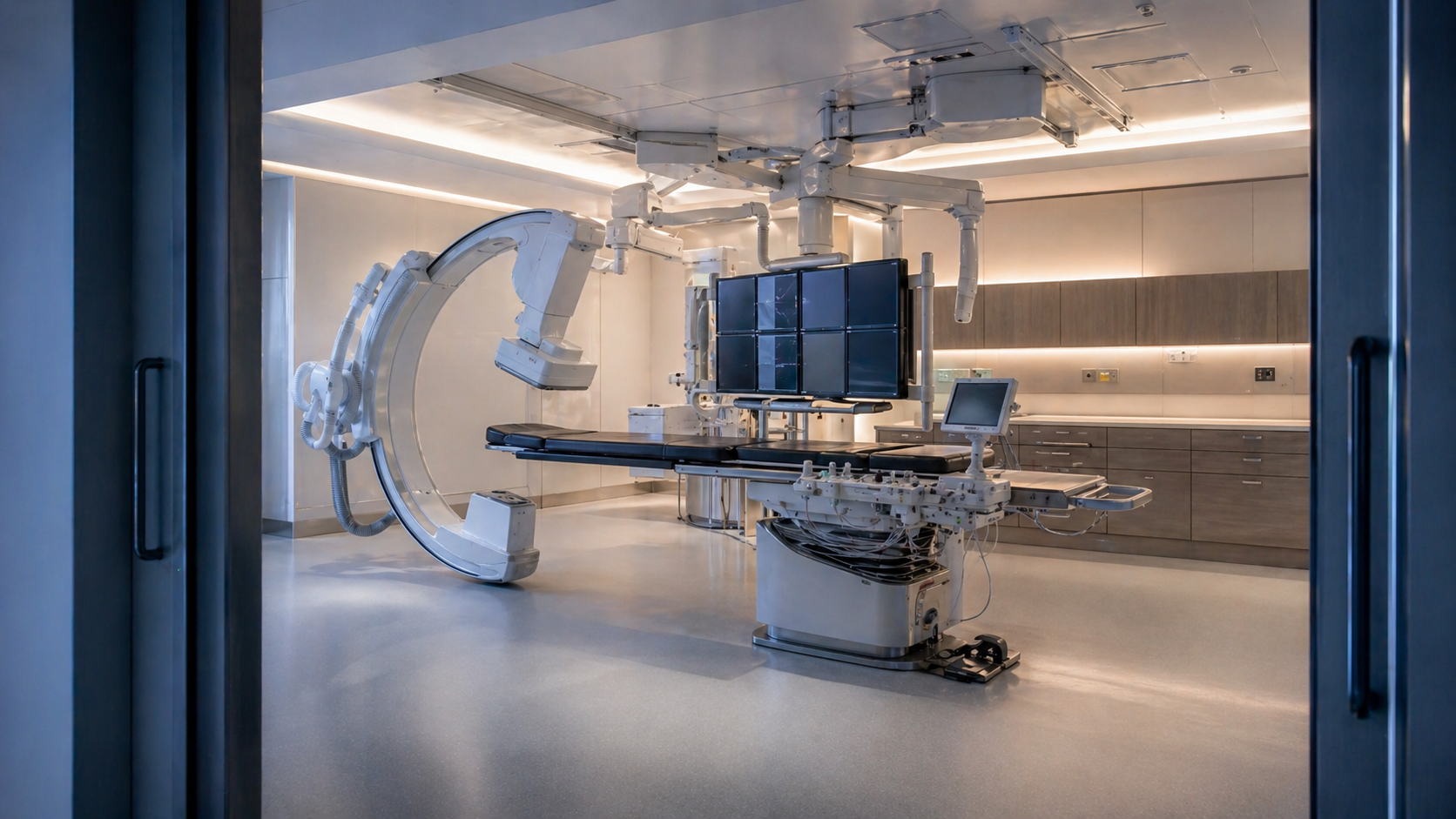
The procedure room is bright and surrounded by X-ray equipment. You lie flat on a narrow table. Local anaesthetic is injected at the access site — usually the wrist — and you may receive light sedation. You will feel pressure but not pain at the access site. Once the catheter reaches the heart, contrast is injected to image the arteries. A common sensation during contrast injection is a brief warm flush.
A diagnostic angiogram takes around 20 to 30 minutes. If a stenting procedure is needed, this is usually done at the same time, which extends the procedure.
Recovery
Afterwards you are moved to the recovery area. If access was via the wrist, a compression band is applied for one to two hours. If access was via the groin, you will lie flat for several hours. You will be observed, given something to eat and drink, and discharged home after two to six hours, depending on the access route and what was done.
What you will leave with
- A summary of the findings
- A clear plan for medications and follow-up
- Written care instructions for the access site
- Time to ask questions before you go home
If anything is unclear after discharge, contact our rooms or, for anything urgent, the hospital where the procedure was performed.